Ready To Take The Next Step?
Looking For A Primary School Readiness Program For Your Child?
Complete our short enquiry form and tell us a little about your child, their strengths, everyday experiences and the areas where additional support may be helpful as they prepare to start primary school. Our team will review the information and help guide you through the next steps for accessing our School Readiness Program.
There’s no obligation to proceed with an assessment. Your enquiry gives us a starting point to understand your child’s circumstances, answer any initial questions and determine whether our School Readiness Program may be appropriate for them.
What Skills Does Our Primary School Readiness Program Support?
Our occupational therapy school readiness program focuses on five key areas of development that can influence a child's participation, confidence and independence at school.
Fine Motor Skills and Pre-Writing Development
Fine motor skills help children participate in everyday classroom activities such as drawing, colouring, cutting, manipulating learning materials and beginning to write.
Our program may include activities that support:
- Pencil grasp, control and comfortable use of drawing tools
- Early pre-writing skills, including lines, shapes and patterns
- Hand strength, coordination and finger dexterity
- Scissor skills and using both hands together
- Manipulating small objects and classroom materials
- Building confidence and endurance for table-based activities
Activities are adapted to each child's developmental stage, recognising that children use different approaches and may benefit from individualised tools or strategies.
Gross Motor Skills, Coordination and Body Awareness
Gross motor skills support children's participation in playground activities, movement games, classroom routines and physical education.
Our program may include activities that support:
- Core strength and postural stability
- Balance and coordination
- Body awareness and movement planning
- Crossing the midline and coordinating both sides of the body
- Navigating playground equipment and physical activities
- Developing confidence during movement-based play
Through enjoyable, movement-based activities, children can explore their physical abilities and develop skills that support participation throughout the school day.
Self-Care Skills and Everyday Independence
Starting school introduces new opportunities for children to manage their belongings, personal care and daily routines.
Our program may include practising:
- Opening and closing lunchboxes, food containers and drink bottles
- Managing school bags and personal belongings
- Putting on and removing shoes, jumpers and hats
- Using zips, buttons and other clothing fasteners
- Developing toileting and handwashing routines
- Following familiar school routines with appropriate supports
We focus on building independence where appropriate while recognising that every child has different support needs and may continue to benefit from assistance or environmental adjustments.
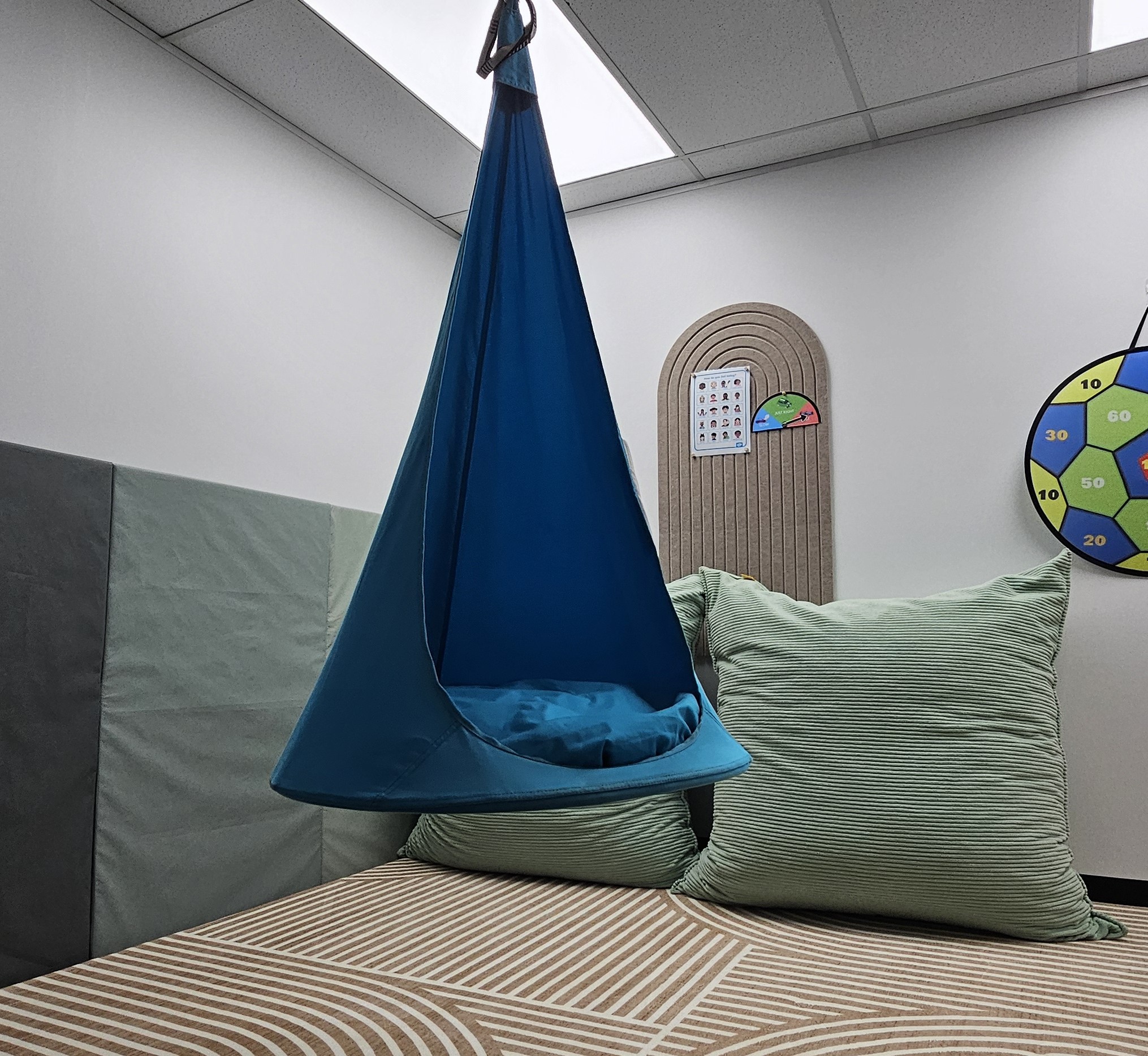
Sensory Processing and Emotional Regulation
School environments can involve unfamiliar sounds, movement, social interactions, routines and sensory experiences.
Our program supports children to better understand their sensory preferences and develop strategies that help them feel comfortable, regulated and ready to participate.
Activities may focus on:
- Recognising emotions and body signals
- Exploring individual sensory preferences and needs
- Developing personalised regulation strategies
- Managing changes in routines and transitions
- Participating in group activities with appropriate supports
- Identifying when a break, movement or assistance may be helpful
- Building confidence in unfamiliar environments
Our neuro-affirming approach recognises that regulation looks different for every child. We focus on creating supportive environments and developing practical strategies rather than expecting children to suppress their natural ways of communicating or regulating.
Executive Functioning, Following Routines and Social Play
Executive functioning skills help children organise themselves, remember instructions, move between activities and participate in everyday school routines.
Our program may include activities that support:
- Following simple and multi-step instructions
- Remembering and completing familiar routines
- Starting and finishing activities with appropriate support
- Managing transitions between preferred and less preferred activities
- Developing flexible thinking and problem-solving skills
- Participating in turn-taking games and shared play
- Communicating preferences, asking for help and navigating peer interactions
Through structured play and practical activities, children are supported to develop skills that can make everyday school experiences more manageable and enjoyable.
Communication, Self-Advocacy and Asking for Help
Starting primary school introduces new opportunities for children to communicate their needs, express preferences and interact with teachers and peers.
Our program may include activities that support:
- Communicating needs, preferences and feelings in ways that work for the child
- Recognising when help or additional support may be needed
- Building confidence to ask teachers or trusted adults for assistance
- Understanding and responding to everyday classroom communication
- Expressing discomfort, sensory needs or the need for a break
- Developing confidence when communicating with peers and participating in group activities
Through play-based activities and supportive interactions, children are encouraged to develop confidence in expressing themselves, advocating for their needs and communicating in ways that feel comfortable and meaningful to them.


